The head shifts forward
Whatever your posture is like, when it changes, the head moves forward from the body's central axis. The first sign is a protruding seventh cervical vertebra, even when your head is up and you're looking straight ahead.
Course focus
Fix your neck hump with individually selected exercises
1-year access — $49.99$129
If the course isn't right for you, we'll refund 100% within 14 days of payment
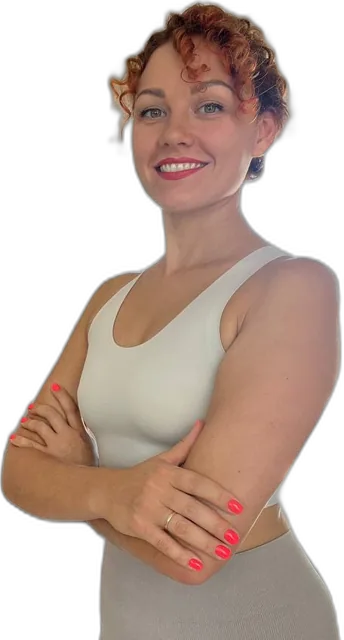
Author — Maria Zhirnova: trainer, 23 certificates, 320,000+ Instagram followers
Why exercises are selected by posture ↓How Maria explains it
The common explanations are "salt deposits," excess weight, genes. Maria, drawing on her own experience and her students' experience, looks at something else: a neck hump is linked to the position of your whole body.
Whatever your posture is like, when it changes, the head moves forward from the body's central axis. The first sign is a protruding seventh cervical vertebra, even when your head is up and you're looking straight ahead.
The pelvis can tilt forward, tilt back or shift forward — and in every case the head moves forward. For Maria herself, the cause of her neck hump wasn't slouching but a pelvis tilted back.
With a strongly rounded back, there may be no neck hump. But with a flat back, the angle between the neck and back is sharper, the tension in this area is stronger — and the neck hump appears first.
You're usually advised to extend your back. But a flat back shouldn't be extended — it needs different exercises. The wrong routine doesn't help, and the tension around the neck hump can even get worse.
Massages and treatments give a temporary effect until the position of your body changes. That's why a specialist first assesses your posture as a whole — head, upper back and pelvis — and only then selects your program.
The first step after payment is a posture assessment from photos. Based on it, a specialist chooses one of the course's 7 programs.
The photo assessment is used to select your program and does not replace a medical diagnosis. If the bump appeared quickly or is growing, show it to a doctor.
Five minutes from a webinar about the neck hump: why posture involves your whole body, what the wall test shows, why a neck hump can appear even without slouching, and how exercises are selected.
Your training program is chosen after a posture assessment from your photo.
Course member area data as of October 5, 2026
What the lessons cover
Every week brings lessons for your face and lessons for your neck, upper back, arms and breathing, plus a full-body workout at the end of the week.
Maria links a neck hump to the position of the whole body, not just to slouching. That's why the body exercises are chosen based on your posture assessment — one of 7 programs.
Lessons for the upper back, neck, arms and wrists, and breathing. Once a week, a full-body workout.
Scalp massage and acupressure for the face, plus a separate lesson: a massage between the brows with spoons dipped in hot and cold water.
Facial lymphatic drainage and scalp self-massage — from day one of the course. In the second week, work on the tissues of the head becomes more intense, and the ears are added.
Every week, a lesson for the jaw and a lesson for the chewing muscles and tongue position.
Eye exercises — 4 stages over the course. From the second stage, you'll need an ordinary pen or pencil.
The face block is the same in all programs. Exercises for the neck, upper back and arms are chosen based on your posture assessment — it determines which of the 7 programs opens for you.
About 30 minutes a day, usually two short lessons. On days 1–6, roughly half the time goes to the neck, upper back, arms and breathing, and half to the face. Day 7 is a full-body workout, 30–47 min. From stage to stage, the exercises change and get more challenging.
Here's what the first week looks like
An example of one of the 7 programs. In the others, some of the lessons are different — to match your posture type.
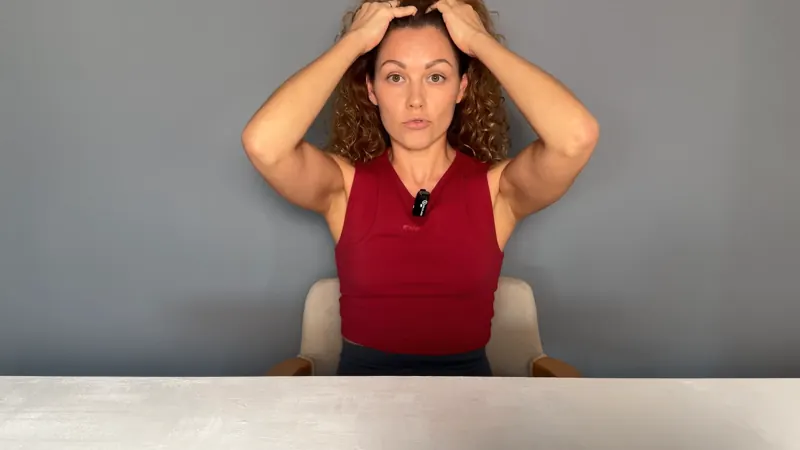
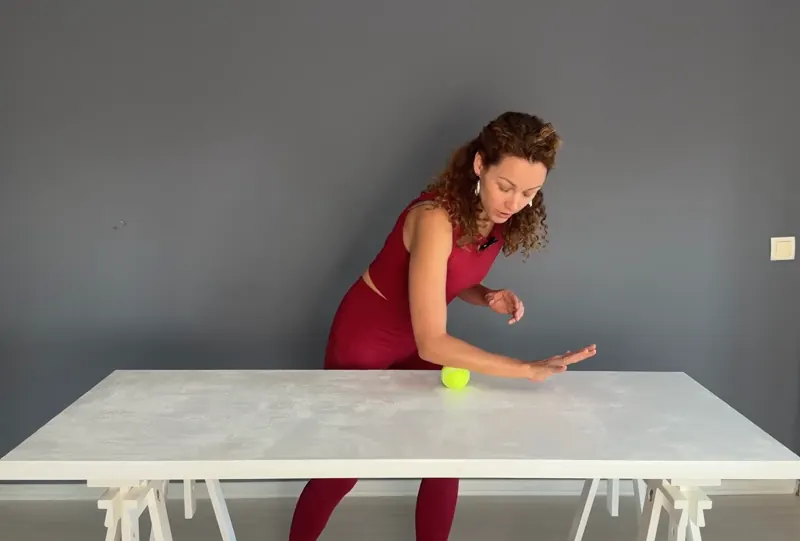
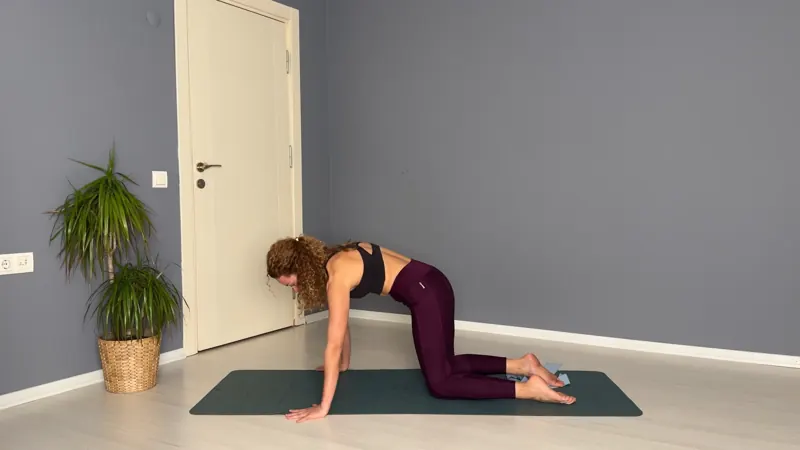
A mat, a towel, a pillow, a tennis ball (or a myofascial release ball), and a long strap or belt.
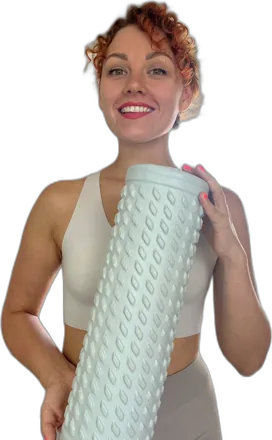
A foam roller for myofascial release — you can substitute a rubber ball. For wall work, a yoga block comes in handy, but you can do without it.
For the face — cream, paper napkins, two tablespoons, and bowls of hot and cold water; for the eye exercises — a pen or pencil.
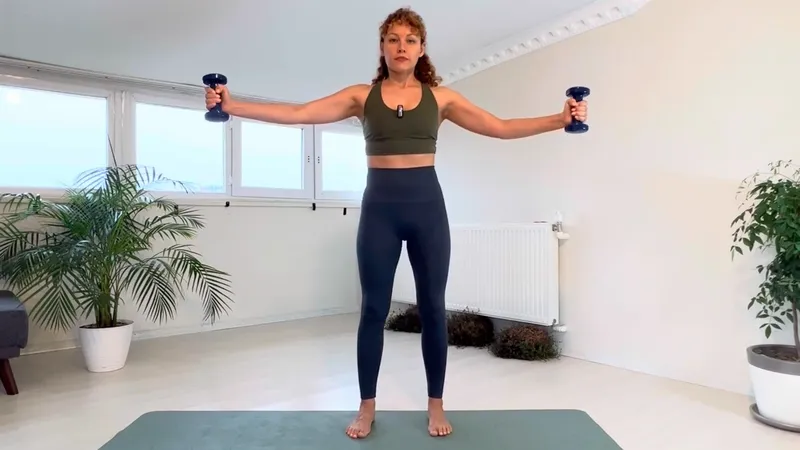
For one of the workouts — 2 dumbbells or water bottles. No gym equipment needed.
Contraindications are listed in the questions below.
Comments from the course member area — under each lesson you can share your impressions or ask a question.
"I'm already holding my neck much better. It feels like it was set in the right position."
"It feels like I've been looking for this neck position correction workout my whole life. Thank you!"
"The exercises are effective. They're not too hard, but they really help: my neck has become softer and more flexible, and my shoulders have opened up a little."
"Maria, my shoulder blades and upper back really loved this workout. The exercises are well chosen. The eye workout is also really great. Thank you 🫂"
"What great exercises, every day is a pleasure. I especially liked the spoon massage — it really feels so nice both during and after. Thank you!"
Question for lesson 5: "During the wall exercises, when I need to press into the wall, my body weight immediately shifts to my toes and doesn't reach my heel at all. What should I do?"
Answer from the course team: "Reduce the pressure on the wall until you can feel support through your whole foot. Then, with each new workout, increase the pressure on the wall a little."
Published without names, with typos corrected and minor cuts.
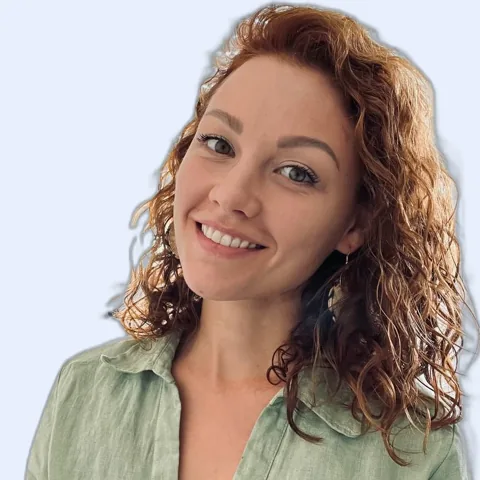
Trainer and author of the "Neck & Face" course. She has completed dozens of courses and seminars, earned 23 certificates, and keeps learning.
Maria worked through her neck hump from her own experience: for her, the cause wasn't a rounded upper back but a pelvis tilted backward — which pushed her head forward. That's why the course first assesses the position of your whole body and only then chooses the exercises.
In the video lessons, Maria demonstrates every movement.
The course works on what Maria links to a neck hump — body position: the upper back, neck and shoulders, plus a full-body workout once a week. The program is chosen based on your posture assessment. How quickly your body changes varies from person to person: it depends on where you start and how regularly you work out.
After you pay, a specialist assesses your posture from 7 photos and a short questionnaire and picks one of the course's 7 programs to match your posture type: for example, a flat back needs different exercises than a rounded one. Based on the assessment, exercises are chosen for the neck, upper back, shoulders and arms; the face block is the same in all programs.
The course has two parts: work on the neck, upper back and posture — and a face block: self-massage, lymphatic drainage, and eye and jaw exercises. On days 1–6 of each week, the time is split roughly evenly between them, and day 7 is a full-body workout.
"Neck hump" exercises are usually the same for everyone — most often they extend the back. Maria explains that a flat back needs different exercises. In the course, the program is chosen based on your posture assessment, the workouts follow a 4-week plan, and the course team answers questions under the lessons.
After you pay, a posture diagnostics button will appear in your member area. You need to take 7 full-length photos following the instructions and fill out a short questionnaire — about 10 min. A specialist reviews the photos, and usually within a day a PDF report and your selected program appear in the member area.
About 30 min a day, with a full-body workout once a week, 30–47 min. The lessons are in the member area, and you can work out whenever it suits you.
No gym equipment is needed. You'll need a mat, a towel, a pillow, a tennis ball, a band or a belt, a foam roller for myofascial release (can be replaced with a rubber ball), and for the face — cream, napkins and two spoons. The full list is in the program above.
If you have chronic spinal conditions, it's worth consulting a doctor before you start.
You get access to all materials for 1 year: you can repeat the program and rewatch the explanations.
Write to [email protected] or on WhatsApp within 14 days of payment, and we'll refund 100% of the cost the same way you paid. You don't need to give a reason.
The "Neck & Face" course. A posture assessment based on 7 photos is included in the price.
Enter the country or the name of the currency you want to pay in:
100% refund within 14 days. Write to [email protected] or on WhatsApp, and we'll refund your money the same way you paid. You don't need to give a reason.