FLAT BELLY · COURSE BY MARIA ZHIRNOVA

FLAT BELLY: GENTLE AB MUSCLE RECOVERY Complete ab muscle recovery

A signature method for your abs after childbirth and with diastasis recti. Safe exercises that strengthen your core muscles and restore your belly from the inside out

I WANT A FLAT BELLY

HOW TO TELL IF YOU HAVE DIASTASIS RECTI? A SIMPLE TEST

CHECK YOURSELF RIGHT NOW
A step-by-step guide to checking at home for separation of the rectus abdominis muscles
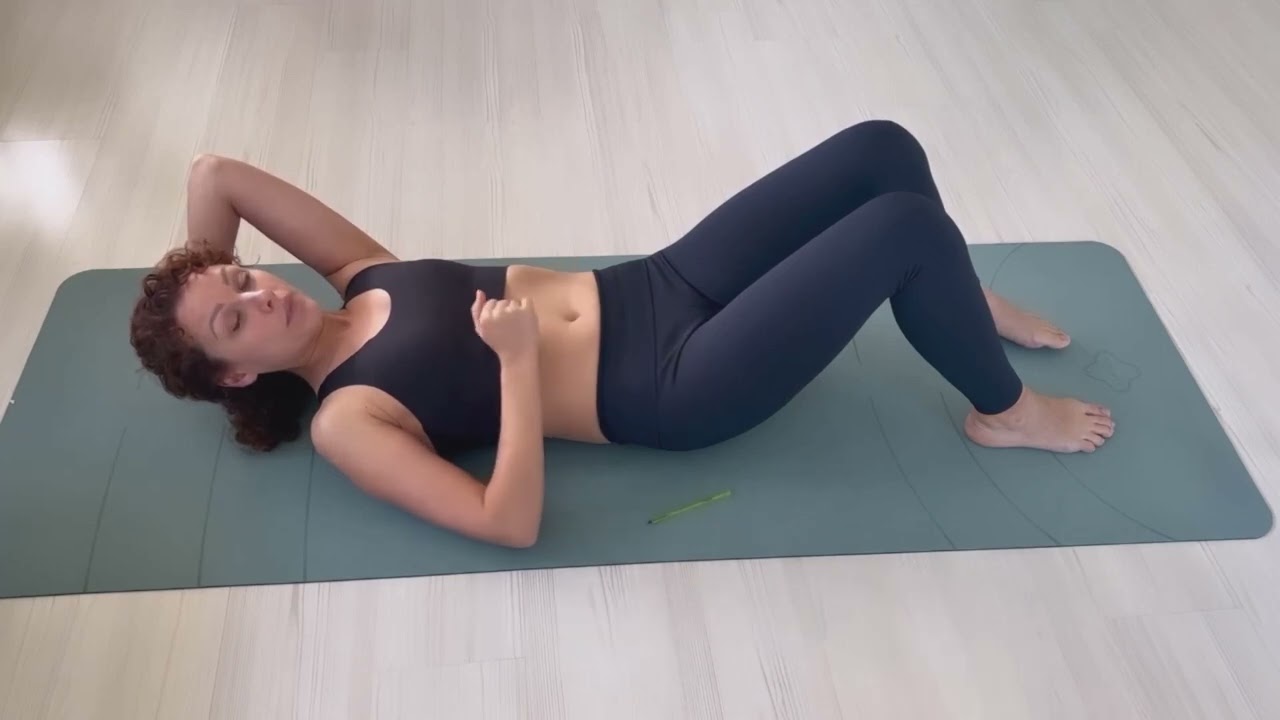
Diastasis recti test - how to check for ab muscle separation

A COMPREHENSIVE APPROACH: DIASTASIS RECTI + FLAT BELLY

🎯
Working with diastasis recti
Diastasis recti is a separation of the rectus abdominis muscles. Regular crunches and planks are dangerous with diastasis recti! I'll teach you to activate the transverse abdominis and the pelvic floor, which draw the rectus muscles back together.
🔍
Identifying your type of problem
Diastasis recti, visceral fat, weak core muscles or poor posture — each problem needs its own approach. You'll learn to identify your type and choose the right exercises.
💪
Safe ab strengthening
Not all ab exercises are equally beneficial. Especially with diastasis recti! I'll show you exercises that create a flat belly WITHOUT straining the linea alba or risking injury.
🧘
Proper breathing and the vacuum
Breathing techniques and the vacuum are the foundation of recovery. Incorrect breathing creates intra-abdominal pressure and stretches the muscles. I'll teach you to breathe so that your muscles draw closer together.
🔄
Correcting posture and pelvic position
Incorrect pelvic position makes your belly stick out and worsens diastasis recti. That's why we work on posture in the course, too.

WHY DOES YOUR BELLY STICK OUT?

🤰 Diastasis recti after childbirth
During pregnancy, the growing uterus stretches the rectus abdominis muscles, and the linea alba (the connective tissue between the muscles) becomes thinner. After childbirth, the muscles don't always return to their place — a separation (diastasis recti) forms. Your belly sticks out and doesn't pull in.
💪 Weak deep core muscles
The transverse abdominis and the pelvic floor are your "inner corset" that pulls your belly in. If they're weak, your belly sticks out and diastasis recti gets worse. It's important to activate precisely these deep muscles.
⚡ Excess intra-abdominal pressure
Incorrect breathing, constantly tensing your abs, straining when lifting heavy things — all of this creates excess pressure from the inside and stretches the linea alba. Diastasis recti gets worse and your belly sticks out.
🏋️ Wrong exercises
Regular crunches, planks and "bicycle" are DANGEROUS with diastasis recti! They put pressure on the linea alba and stretch the muscles even more. You need special safe exercises.
🧬 Postural problems
Hyperlordosis (a pronounced arch in the lower back) or an anterior pelvic tilt makes the belly stick out no matter how strong your muscles are. That's why working on posture is part of the course.

It's important to understand: you can't "get rid of" diastasis recti with crunches. You need to activate the deep core muscles, build proper breathing and avoid dangerous exercises. That's exactly what I'll teach you!

⚠️ IMPORTANT! WHY DO YOU NEED A PERSONALIZED CHOICE OF EXERCISES?

One-size-fits-all exercises from the internet don't work for diastasis recti and a protruding belly, because every person has their own anatomical features:

  • Diastasis recti of grade 1, 2 or 3 — calls for a different intensity and type of exercise. With grade 3, ordinary exercises are dangerous!
  • Pelvic position (hyperlordosis or a flat lower back) — affects how intra-abdominal pressure is distributed and the load on the linea alba
  • Weak core muscles (a flabby belly) — you need to strengthen the transverse abdominis and the pelvic floor
  • Time since childbirth — affects how ready the connective tissue is for exercise and how fast you recover
  • Postural problems (lordosis, pelvic tilt) — the belly sticks out because of the position of the skeleton. We correct posture first!

🎯 In the course:

Maria shows you how to determine the grade of your diastasis recti and your own pelvic position on your own, and how to choose exercises for your specific situation.

The right pelvic position reduces excess pressure on the linea alba.

That's why generic YouTube videos don't help — they don't take YOUR anatomy into account. And the course teaches you to choose exercises for yourself!

THE COURSE IS FOR YOU IF:

The course is suitable for women after childbirth (from 6 weeks) and for anyone who wants a flat belly.

"Flat Belly" Course

A comprehensive program for restoring your abdominal muscles. We work with the cause: we activate the deep core muscles, teach proper breathing, strengthen your muscular corset and restore firmness and strength to your belly.

🎯
Working with diastasis recti
We work with the separation of the rectus abdominis muscles by activating the transverse abdominis and strengthening the deep core stabilizers.
📏
Flat Belly
You learn to activate your abdominal muscles correctly and keep them toned in everyday life.
💆
A healthy back
We strengthen the core and work on posture — for a stable, strong back.

💯 MONEY-BACK GUARANTEE WITHIN 14 DAYS

If the course isn't right for you, we'll refund your money in full.

How it works:

  • Follow the program for 14 days
  • Do the exercises according to the instructions
  • If the course wasn't right for you, write to us within 14 days
  • We'll refund 100% of the course price, no questions asked

Honest and transparent.

Important!

How the workouts work

You can do the workouts whenever it's convenient for you.

Every day you'll receive small 30-minute assignments, which you can also do whenever it suits you.

Contraindications

  • Pregnancy (at any stage)
  • The first 6 weeks after childbirth (complete rest is needed)
  • The first 8-12 weeks after a C-section
  • Hernias of the anterior abdominal wall (umbilical, linea alba)
  • Recent abdominal surgery (less than 3 months ago)
  • Acute inflammatory processes in the pelvis
  • Oncological diseases

If you have hernias, grade 3 diastasis recti (more than 10 cm) or postpartum complications, we recommend consulting a doctor before you start.

What you'll need for the workouts

Comfortable clothes, a fitness mat (optional), and a quiet place to exercise. No additional equipment required!

Get access to the course

The "Flat Belly" course. Maria Zhirnova's signature method.

Enter the country or currency name you want to pay in:

Loading prices...

Who am I?

Maria Zhirnova

TRAINER, MOM OF THREE

When my second child was born, my body seemed to break down. My back hurt, my pelvis ached, and something was off with my women's health… And fitness, which used to help, no longer changed anything. I simply didn't understand: why?

And then I decided: enough of putting up with it. I needed to figure it out. To understand what was happening to me and how to help myself. That's how it all began.

I left my previous job, retrained as a trainer, and dove into the world of the body, anatomy, and movement. Over these 5 years I've completed dozens of courses and seminars, earned 23 certificates, and I'm still learning today.

Now I work with people who are in pain. People with hernias, protrusions, swelling, heaviness, extra weight. And I know how to ease it — without harsh workouts, through gentle but effective techniques. By restoring natural movement and activating the body's internal systems.

I love my work. But I realized I want to share my knowledge not only one-on-one.

That's how this course for the abdominal muscles was born. Here I've gathered techniques that help restore the abdominal muscles after childbirth.

Techniques that help you:

  • exercise safely with diastasis recti
  • strengthen the deep abdominal muscles
  • strengthen your core and pelvic floor
  • establish proper breathing and intra-abdominal pressure
  • work on your posture and pelvic position
  • regain muscle strength and confidence in your body

Simple, safe, and accessible.
No forcing yourself.
With love for your body.

Join me ❤️
Let's make it beautiful — inside and out.

Ready to start?

Your first workout is today: 30 minutes at a time that works for you.

START NOW